
Technology & Systems: The Foundation for Building a Smarter Small Business
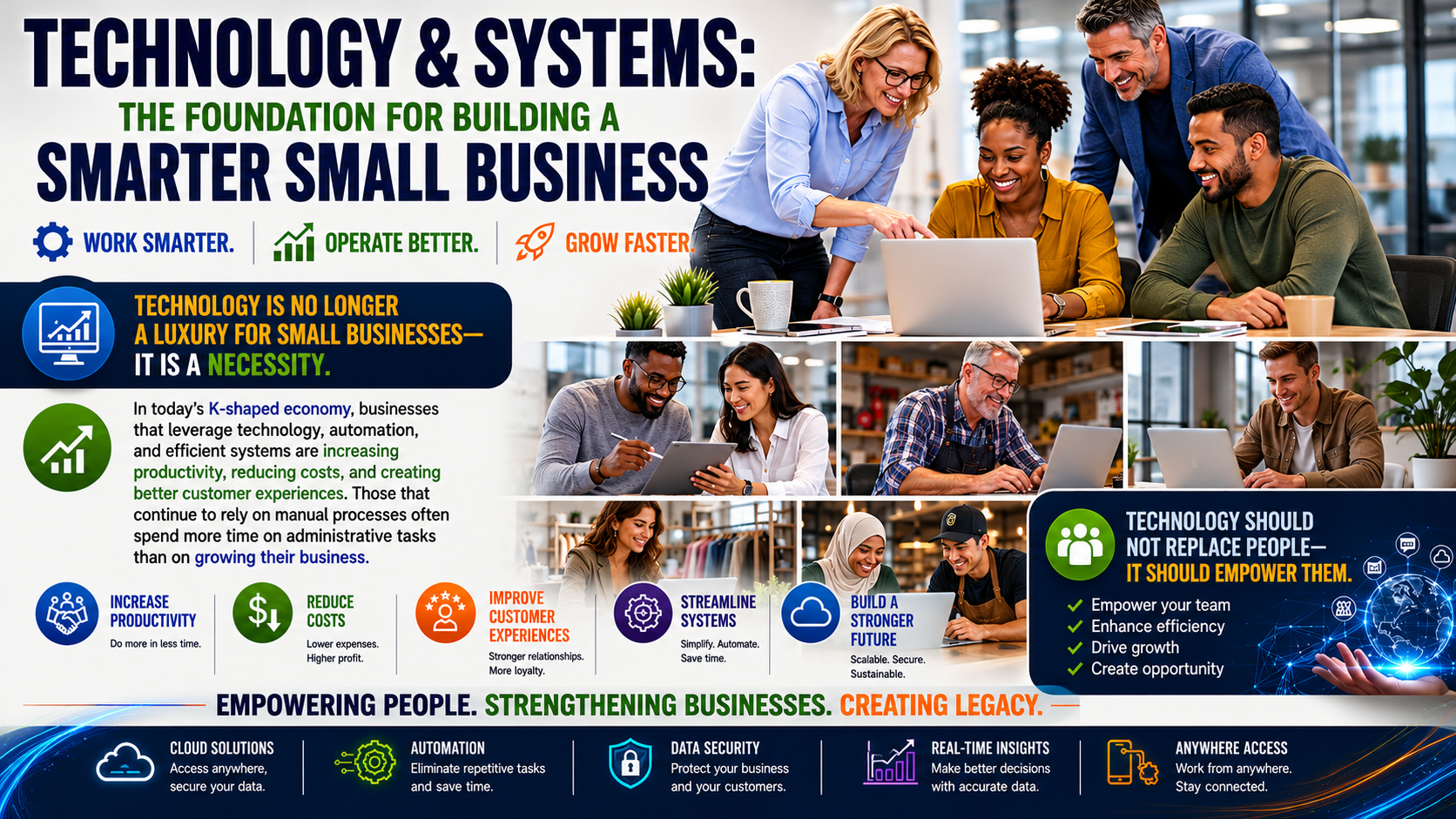
Work Smarter. Operate Better. Grow Faster.
Technology is no longer a luxury for small businesses—it is a necessity.
In today's K-shaped economy, businesses that leverage technology, automation, and efficient systems are increasing productivity, reducing costs, and creating better customer experiences. Those that continue to rely on manual processes often spend more time on administrative tasks than on growing their business.
Technology should not replace people—it should empower them.
By implementing the right systems, entrepreneurs can spend less time managing paperwork and more time serving customers, developing new opportunities, and building long-term wealth.
Why Technology Matters
Every growing business reaches a point where spreadsheets, sticky notes, and manual processes are no longer enough.
Without systems, businesses often experience:
Lost customer information
Inconsistent follow-up
Billing errors
Duplicate work
Poor communication
Missed opportunities
Slower growth
Technology creates structure, improves visibility, and helps businesses scale with confidence.
Implement Core Business Systems
The goal is not to buy more software—it is to implement systems that improve efficiency and support business growth.
Customer Relationship Management (CRM)
A CRM centralizes customer information, tracks sales opportunities, schedules follow-ups, and improves customer relationships.
Benefits include:
Better lead management
Improved sales tracking
Increased customer retention
Faster follow-up
Better reporting
Your customer relationships are one of your most valuable business assets.
Accounting Software
Modern accounting software simplifies financial management by automating bookkeeping, invoicing, expense tracking, and financial reporting.
Benefits include:
Accurate financial records
Faster invoicing
Simplified tax preparation
Better cash flow visibility
Real-time financial reporting
Good financial systems support better business decisions.
Automation Tools
Automation reduces repetitive tasks that consume valuable time.
Examples include:
Email marketing automation
Appointment scheduling
Invoice reminders
Proposal generation
Workflow approvals
Social media scheduling
Lead nurturing
Automation allows business owners to focus on strategy instead of routine administration.
Customer Service Systems
Customers expect quick, consistent, and professional service.
Customer service platforms help businesses:
Manage support requests
Track customer communications
Improve response times
Increase customer satisfaction
Build long-term loyalty
Exceptional service creates repeat customers and referrals.
Cloud Storage
Your business data should be secure, organized, and accessible from anywhere.
Cloud storage allows teams to:
Collaborate in real time
Protect important documents
Reduce data loss
Improve productivity
Support remote and hybrid work
Reliable access to information helps businesses move faster and make better decisions.
The Goal: Reduce Manual Work by 25%
One of the easiest ways to improve profitability is to eliminate unnecessary manual work.
Imagine reducing time spent on:
Data entry
Paper filing
Customer follow-up
Scheduling
Reporting
Invoice processing
By automating routine activities, many small businesses can reduce manual work by at least 25%, allowing owners and employees to focus on higher-value activities that generate revenue and improve customer experiences.
Technology Creates Competitive Advantage
Businesses that invest in technology often experience:
Higher productivity
Faster decision-making
Improved customer satisfaction
Better financial management
Lower operating costs
Increased scalability
Greater profitability
Technology is no longer simply an operational tool—it is a strategic advantage.
Final Thoughts
The businesses thriving in today's economy are not necessarily working harder—they are working smarter.
Technology, automation, and integrated systems help entrepreneurs reclaim time, improve efficiency, reduce costs, and create sustainable growth.
Your goal isn't to automate people out of your business.
Your goal is to automate routine tasks so your people can focus on innovation, relationships, and growth.
Implement Better Systems. Reduce Manual Work. Build a Smarter Business.