
A Strategic Financial Resilience Plan for Small Business Owners: A 5-Step Roadmap to Sustainable Wealth
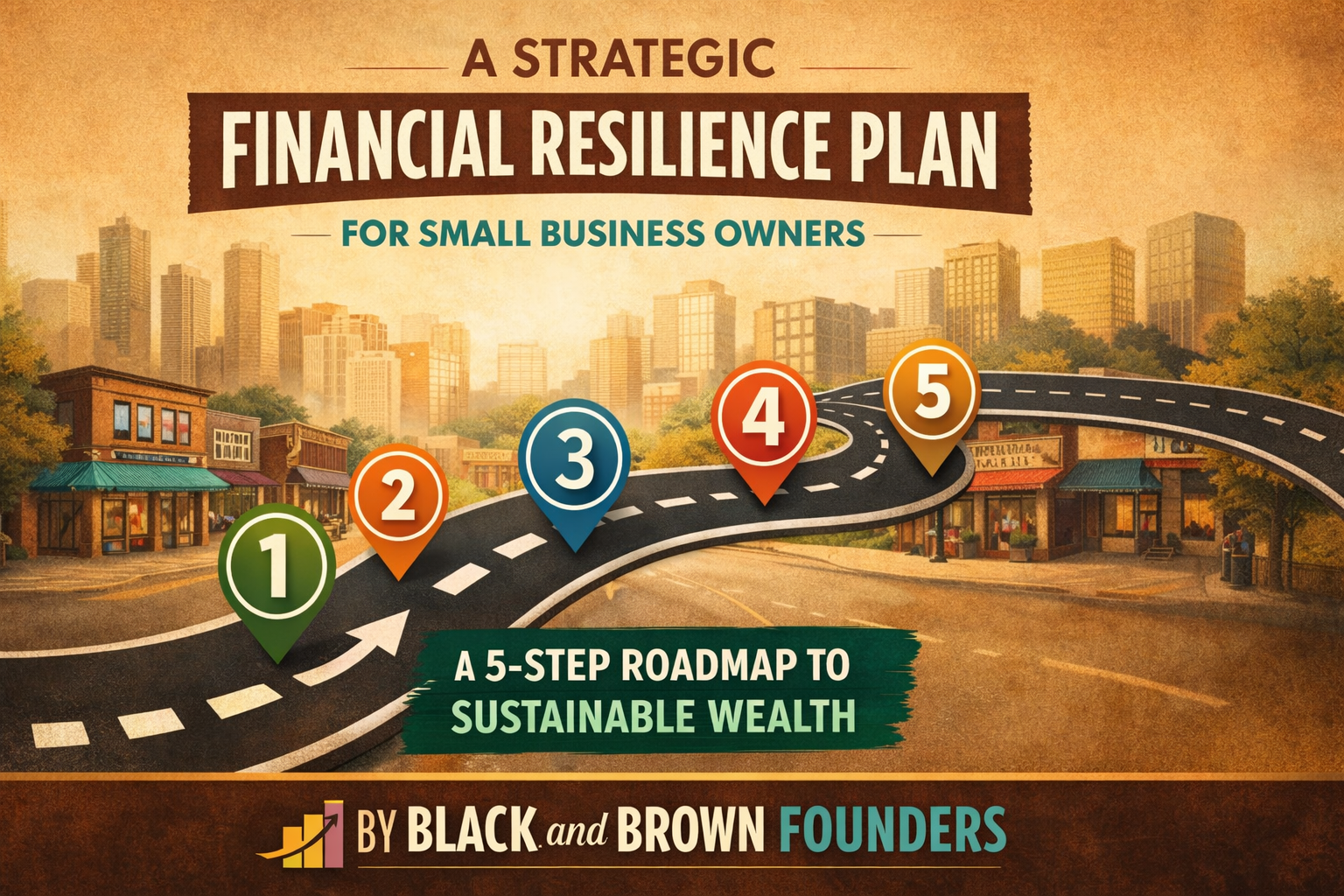
A Strategic Financial Resilience Plan for Small Business Owners: A 5-Step Roadmap to Sustainable Wealth
For Small Business Owners, financial infrastructure is more than a matter of back-office administration; it is the strategic bedrock required to combat systemic capital-access hurdles. Selecting a financial partner is a high-stakes decision that serves as the primary safeguard for your capital. To maximize security, you must select between FDIC-insured banks or NCUA-insured credit unions. Both provide a federal guarantee—typically at least $250,000 per depositor—ensuring that your liquidity remains protected even in the event of institutional failure.
1. Step 1: Architecting Your Financial Infrastructure
A robust banking relationship is your first offensive move in building institutional trust. This relationship facilitates future borrowing capacity, turning a simple deposit account into a strategic baseline for business stability. When selecting a partner, evaluate them as an institutional ally rather than a mere vendor.
The Founder’s Banking Checklist
Strategic Criteria: Critical Considerations for Founders
Fee Schedules: Analyze monthly maintenance, overdraft, and ATM fees to stop unnecessary capital leakage.
Mobile Access: Prioritize high-functioning apps for remote check deposits and real-time treasury management.
P2P Capabilities: Ensure "Person-to-Person" payment tools are integrated for low-friction capital transfers to contractors.
Deposit Speed: Confirm the "Funds Availability Policy" to ensure check deposits are available for immediate operational use.
Institutional Value: Assess the accessibility of branch staff; you must feel valued as a long-term commercial partner.
Navigating Identity Verification Hurdles
Founders who face traditional documentation hurdles should know that federal regulations provide pathways for inclusion. Many institutions accept Individual Taxpayer Identification Numbers (ITINs) or foreign passports and consular identification. Note that while many banks offer online applications, if the institution cannot verify your identity or address electronically, you may be required to visit a branch in person to finalize the account. This is a standard point of friction—prepare your documentation (including lease agreements or utility bills to prove residency) in advance to streamline the process.
2. Step 2: Designing the Cash Flow Spending & Saving Plan
Strategic wealth management requires a mastery of "In" vs. "Out." You must distinguish between Gross Income (total revenue) and Net Self-Employment Income (revenue after taxes and business expenses). Your Spending and Saving Plan is a dynamic offensive tool, not a static document, designed to help you navigate the draw volatility inherent in entrepreneurship.
Calculating Strategic Affordability (The "Method 3" List)
To manage volatility, use a "Past vs. Planned" approach to determine what remains for housing and lifestyle:
Review Past Monthly Amounts: Consult your previous month’s logs to determine your true baseline for Net (Take-Home) Pay and Self-Employment income.
Quantify Non-Housing Expenses: Aggregate all costs for debt payments, groceries, transportation, and healthcare. Crucially, include "Savings" (Emergency Funds) as a non-negotiable expense here.
Project the Planned Monthly Amount: Using your past data, set a "Planned Amount" for the upcoming month to account for projected business fluctuations.
Calculate the Difference: Subtract your Total Non-Housing Expenses from your Total Net Income. This "Difference" is your maximum ceiling for housing costs (rent/mortgage, utilities, and maintenance).
The Consultant’s Warning on "The Difference": A Positive difference provides reinvestment capital; a Zero difference indicates you are at maximum capacity. A Negative difference is a strategic emergency requiring you to immediately increase income, decrease expenses, or incur debt to bridge the gap—the latter being a high-risk move that obligates your future earnings.
Strategic Activity Guide
Daily: Real-Time Asset Tracking
Record every expenditure. This prevents capital leakage and ensures a clean paper trail for tax optimization.
Weekly: The Money Check-In
The Envelope System: For categories where you historically overspend, use labeled envelopes with set weekly cash amounts. When the cash is gone, spending in that category ceases.
Adjust your "Planned" amounts for the following week based on actual spending.
Monthly: The Portfolio Review
Evaluate the "Difference" and adjust your business-draw strategy for the next 30-day cycle.
3. Step 3: Strategic Debt Optimization and Deleveraging
Debt is the act of obligating future income to pay for past choices. Every dollar lost to interest and late fees is a dollar stolen from your company’s future vision. Deleveraging is the defensive necessity required to reclaim your cash flow and prepare for future growth.
Deleveraging Frameworks
High Cost Debt First Method:
Advantage: Maximizes interest savings by targeting the highest APR first.
Disadvantage: Slower psychological wins if the balance is large.
Snowball Method:
Advantage: Targets the lowest balance first to create rapid momentum and "wins."
Disadvantage: Generally results in higher total interest costs over the life of the debt.
The Power of Prepayment: Regardless of the method, always direct the lender to apply extra payments specifically to the principal. This reduces the total interest owed and shortens the debt lifecycle.
Avoid predatory "High Cost Debt" like payday and vehicle title loans, where monthly fees often exceed 25%. The Life Cycle of Debt: Delinquency leads to Default, which eventually leads to Charge-off. This cycle risks the loss of essential assets like vehicles (via title loans), which destroys your mobility and income-generating capacity.
4. Step 4: Engineering a Productive Credit Profile
If debt management is your defense, building a Productive Credit History is your Offensive Play. A high credit score is a strategic asset that secures professional space, lowers insurance premiums, and grants you access to low-interest capital for scaling.
The Five Factors of Credit Engineering (FICO Model)
To move your score upward (é), prioritize these specific "Up-Arrow" actions:
é Payment History (35%): Pay every bill on time, every time. This is the single most impactful factor.
é Amounts Owed (30%): Lower your Credit Utilization Rate. Using more than 30% of your limit is the "danger zone"; keep it between 10-20% for maximum score impact.
é Length of Credit History (15%): Maintain your oldest accounts to demonstrate a long-term track record.
é New Credit (10%) & Credit Mix (10%): Avoid simultaneous applications for new credit, but maintain a healthy mix of revolving (cards) and installment (loans) accounts.
Engineering Alternative Credit History
If you have a "thin" credit file, compile a non-traditional dossier to prove creditworthiness to lenders:
[ ] 12+ months of consistent rent payment records.
[ ] Utility bill history (electric, gas, water).
[ ] Mobile phone and internet service payment logs.
[ ] Documentation of regular, consistent deposits into a savings account.
Exercising Your FCRA Rights
Under the Fair Credit Reporting Act (FCRA), you have the legal right to dispute inaccurate data. If denied an account due to a ChexSystems or Early Warning report, take these three steps:
File a Formal Dispute with the reporting agency (online or via certified mail).
Contact the Information Furnisher (the bank) to challenge the inaccurate data at the source.
Recheck your report after 30 days to ensure the correction is permanent.
5. Step 5: Asset Preservation and Housing Strategy
Housing stability is the ultimate anchor for an entrepreneur. You must define "Safe and Secure" housing based on your business needs—whether that means proximity to clients, accessibility for disability needs, or cost-efficiency to allow for business reinvestment.
The Founder’s Decision Guide: Rent vs. Buy
"Your housing choice must support, not drain, your capital flexibility."
Capital Maintenance: Homeowners should budget 1% to 4% of the property’s value annually for repairs. Renters delegate this risk to the landlord.
Liquidity Demands: Buying requires 2%–5% in closing costs and up to 20% down. Renting requires first/last month’s rent and a security deposit.
Credit Requirements: Renting often requires a high score for lease approval, while buying uses your home as a productive trade line.
Lease Agreement & Legal Rights Checklist
Protect your rights as a renter with these critical distinctions:
Maintenance Responsibilities: Ensure the lease explicitly states the landlord’s obligation to keep the unit livable. If terms are unclear, consult your City/County Housing Department or a HUD-approved housing counselor.
Reasonable Accommodations: These are changes to rules or policies (e.g., a reserved parking spot) for those with disabilities; housing providers must provide these.
Reasonable Modifications: These are structural changes (e.g., widening doors) that you have the right to make at your own expense.
Privacy & Entry: Ensure the lease requires a minimum of 24-hour notice before the landlord enters the premises.
Final Protection Layers: Always obtain Renter’s Insurance to protect your inventory and equipment stored at home. Additionally, place Security Freezes at Equifax, Experian, and TransUnion to prevent unauthorized credit accounts from being opened in your name.
The Founder’s Action Commitment
Infrastructure Imperative: I will establish a relationship with a federally insured ally (FDIC/NCUA) that provides the mobile and P2P tools required for high-velocity operations.
Cash Flow Command: I will track "Past vs. Planned" amounts monthly to manage volatility, ensuring my business-draw covers all liabilities and savings before housing.
Deleveraging Defense: I will systematically eliminate high-cost debt and direct all extra payments to the principal to stop the obligation of my future income.
Credit Offensive: I will engineer a score above the "danger zone" by maintaining utilization under 30% and aggressively disputing inaccuracies under my FCRA rights.
Asset Preservation: I will anchor my business in a stable, secure housing environment, ensuring my lease protects my rights to accommodations and privacy while shielding my assets with insurance and credit freezes.